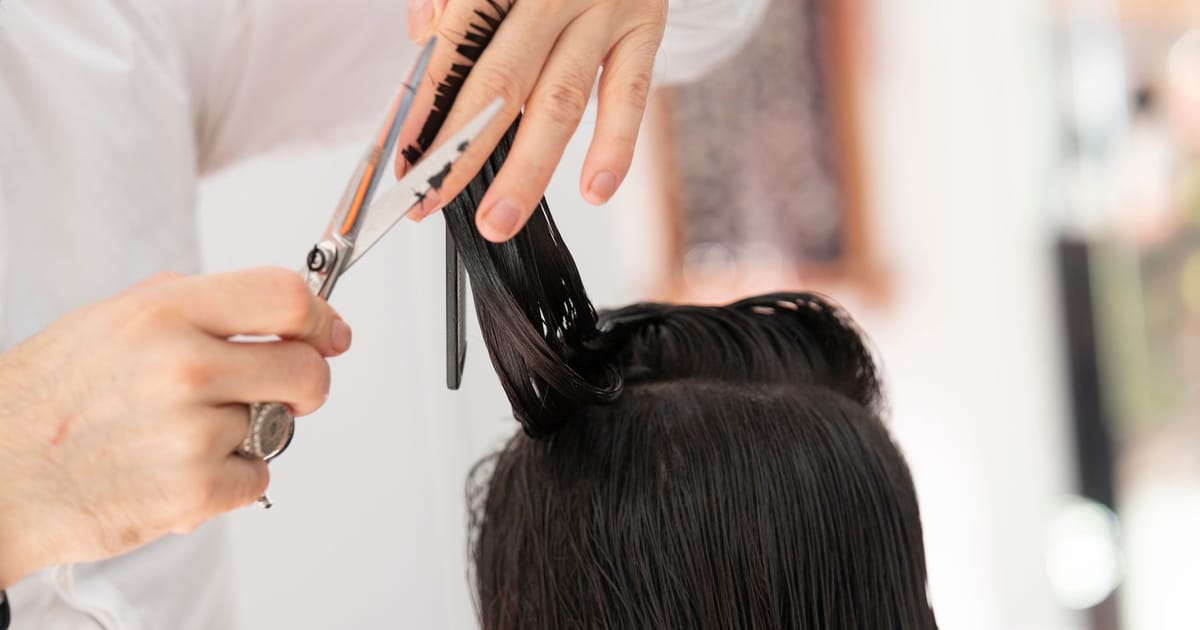
A haircut in the US typically costs $15 to $100 or more depending on salon tier, stylist experience, location, and whether styling is included. Budget chain salons generally charge $15 to $35. Mid-range independent salons average $45 to $95 for women and $25 to $60 for men. High-end and luxury salon cuts range from $100 to $200 or higher. Tip is not included in any of those figures.
What the Average Haircut Actually Costs
Haircut pricing varies more than most service categories. The Professional Beauty Association (PBA) tracks pricing trends across US salons and consistently finds a wide spread -- not because the underlying work differs dramatically, but because salon real estate, stylist tenure, local market wages, and client expectations all pull costs in different directions.
A broad picture: budget chain salons (Great Clips, Supercuts, Sport Clips) charge roughly $15 to $30 for most cuts. Mid-range independent salons and regional chains land in the $40 to $95 range for women's services and $25 to $55 for men's. High-end destination salons in major cities -- think Manhattan, Los Angeles, Chicago, or Miami -- routinely charge $100 to $200 for a women's cut with a senior stylist, and $60 to $100 for men's.
The table below gives a working reference across service types and salon tiers.
| Cut Type / Salon Tier | Typical Price Range | Notes |
|---|---|---|
| Women's cut -- budget chain | $15 -- $35 | Wash usually extra or basic rinse only |
| Women's cut -- mid-range salon | $45 -- $95 | Often includes a shampoo; blow-dry varies |
| Women's cut -- high-end/luxury | $100 -- $200+ | Includes consultation; styling often included |
| Men's cut -- budget chain/barbershop | $15 -- $30 | May include neck trim |
| Men's cut -- mid-range salon | $25 -- $60 | Shampoo add-on common |
| Men's cut -- high-end salon | $50 -- $120+ | Full service experience |
| Children's cut (under 12) | $15 -- $45 | Wide range; chain salons lowest |
| Cosmetology school cut | $10 -- $20 | Supervised by licensed instructors |
Ranges compiled from Professional Beauty Association pricing surveys and consumer market data; individual salons vary. Prices reflect services at time of publication and do not include tip.
Key takeaway
The single biggest predictor of haircut cost is not the service itself -- it is which salon tier you walk into. Choosing a mid-range independent over a budget chain can double the price. Choosing a luxury urban salon over a mid-range one can double it again.
Women's vs. Men's vs. Children's Cuts: Why the Price Differs
The gap between women's and men's haircut pricing is one of the most common sources of sticker shock, and it is worth understanding why it exists -- even when the price difference feels unfair.
Women's Haircuts
Women's cuts typically cost more because they take longer. A skilled cut on long or layered hair involves sectioning, tension management, and precision work that a short men's cut does not require at the same level. A thorough women's cut at a mid-range salon often runs 45 to 75 minutes. Senior stylists at high-end salons may spend 90 minutes on a single service.
That said, a woman with a short pixie cut paying $85 for what takes 30 minutes is often understandably frustrated. Pricing by gender rather than by time and complexity is a practice the industry is slowly moving away from, though it remains common.
Men's Haircuts
Men's cuts are typically priced lower and take less time -- 20 to 40 minutes in most cases. Mid-range salons generally charge $25 to $60. The lower end reflects speed; the upper end reflects seniority and market. Men booking at full-service salons rather than barbershops often get the addition of a proper shampoo and scalp massage, which affects both the experience and the final number.
Children's Haircuts
Children's cuts are the most variable category. Budget chain salons often advertise kids' cuts in the $15 to $22 range. Independent salons typically charge $25 to $45. The variation reflects not just the salon tier but the reality that cutting a child's hair can take as long as an adult's -- or longer, depending on the child.
Tip
Many salons offer a children's pricing break for kids under a certain age (usually 10 or 12). Ask before booking. Some salons also have stylists who specialize in children's cuts, which tends to mean a faster, lower-stress appointment for everyone involved.
How Salon Tier Changes the Experience and the Price
Choosing between a budget chain, a mid-range independent, and a high-end salon is not just a price decision -- it is a different service model at each level.
Budget Chain Salons
Chains like Great Clips, Supercuts, and Cost Cutters compete on price and convenience. Walk-in availability is part of the model. Stylists are licensed, but turnover can be high and appointments are typically kept short. These salons are a reasonable choice for a maintenance trim on a straightforward style. They are a less reliable choice for a significant cut, a complex layering, or clients with textured or very fine hair that requires nuanced technique.
Mid-Range Independent Salons
The middle tier -- locally owned salons, regional chains, and smaller independent studios -- is where most of the US salon market lives. According to IBISWorld salon industry data, independent salons represent the majority of US establishments by count. Pricing at this tier reflects local market conditions more than brand standards, so a mid-range salon in a mid-size Midwestern city will charge less than one in a coastal metro doing comparable work. A shampoo and basic blow-dry are often included, and stylists generally have more time per client.
High-End and Luxury Salons
At the high end, you are paying for a stylist's specific training, reputation, and waitlist. Many top-tier stylists have trained at recognized programs, worked for known brands, or developed a following through editorial or social work. The price premium reflects that -- and the real estate costs of operating in premium salon neighborhoods.
For a see-and-be-seen blowout or a precision cut from a stylist with a long track record in your hair type, the premium can be worth it. For a routine trim, it usually is not.
How Stylist Seniority Affects What You Pay
Most salons price by stylist level, not by service alone. A junior or associate stylist might charge $45 for a cut that the senior stylist on the floor charges $90 for. An artistic director or master stylist at the same salon might charge $130 or more.
The level names vary by salon -- junior, associate, stylist, senior, master, creative director -- but the pricing logic is consistent: more experience, a longer client waitlist, and specialized training all push the rate up.
This tiered structure is one of the most useful pieces of information a client can use when booking. A junior stylist at a well-regarded salon has been hired, trained, and supervised by the senior team. For a routine cut or a straightforward style refresh, junior-level work is often excellent and costs meaningfully less. See how to choose a hair salon for what to ask about stylist credentials and training culture before booking.
Tip
When calling to book, ask which stylists have openings at your target price point. Most front-desk staff will match you to the right tier without hesitation. You can also ask whether a specific senior stylist has a junior associate who trained under them -- that combination often delivers excellent results at a lower price.
Location as a Pricing Factor
Market matters enormously. The Professional Beauty Association notes that regional variation in salon pricing across the US is substantial -- a haircut that costs $60 in a suburb of Dallas might cost $120 at a comparable salon in Brooklyn.
The driving factors: commercial rent, local wage expectations, and what the client base will pay. A salon in midtown Manhattan is paying dramatically more per square foot than one in a mid-size Ohio city. That cost passes through to the service menu.
Conversely, smaller markets sometimes have genuinely skilled stylists charging less than their urban counterparts -- not because the work is lower quality, but because the local market supports lower pricing. If you are traveling and need a cut, do not assume a lower price means lower caliber. Check the stylist's portfolio and reviews.
Add-Ons: What Can Push the Final Total Higher
The advertised cut price is often the floor, not the ceiling. Several add-ons commonly increase the total:
Shampoo and conditioning treatment. Some salons include a basic shampoo in the cut price; others charge $8 to $20 separately. A deep conditioning treatment or bond-building treatment can add $20 to $50 or more.
Blow-dry and style. A blow-dry is often included, but a full styling service -- diffused for curls, set with a round brush, or smooth-pressed -- can be a separate line item. This is especially common at salons with a blowout bar format. Expect $25 to $60 for a full style. See average salon prices for a broader look at how styling services are bundled.
Treatments at the chair. Scalp treatments, toning rinses, and glossing services are often offered as enhancements after the cut. Each can add $20 to $75 depending on the salon.
Retail product. This one is on the client -- stylists typically recommend products during a service, and saying yes at the chair can add $30 to $80 to the ticket.
Does a Haircut Include Styling?
This is one of the most common sources of confusion at checkout. The honest answer is: it depends on the salon's service menu, and you should ask before sitting down.
At most mid-range salons, a "cut and blow-dry" is a single service priced together. The blow-dry is not a full curling or heat-styling session -- it means the stylist will dry your hair and smooth or shape it as part of finishing the cut. If you want a specific finish (defined curls, a sleek blowout, a voluminous round-brush style), confirm whether that is included or priced as an add-on.
At budget chain salons, a blow-dry may not be included at all, or it may be minimal. At high-end salons, a full styling finish is typically included in the cut price.
Tipping as a Real Cost Factor
Tip is not optional at most salons -- it is a normal part of the compensation structure for stylists, many of whom are booth renters or commission-based employees. The industry standard, per PBA guidance, is 15 to 20 percent of the pre-tax service total.
On a $65 mid-range haircut, that means a $10 to $13 tip, pushing the real total to $75 to $78. On a $150 luxury cut, the tip alone is $22 to $30. Building tip into your mental budget before booking will prevent any checkout surprise.
For a deeper breakdown of tipping norms across services, see how much to tip a hairdresser.
Note
Some salons add a service charge -- often 18 to 20 percent -- automatically, especially for larger parties or during peak booking periods. Read the receipt before adding a manual tip on top. Doubling the tip is a common and expensive mistake.
How to Get Good Value on a Haircut
Getting a quality cut without overpaying is more practical than most people assume. A few reliable approaches:
Book with a junior stylist. As noted above, junior stylists at quality salons are trained, supervised, and often excellent. The rate discount is real -- sometimes 30 to 50 percent lower than the senior rate at the same salon -- and the quality for a routine service is frequently comparable.
Ask about training nights. Many salons host training sessions where senior stylists mentor junior team members on real clients. These cuts are heavily discounted or free. The tradeoff is that the session takes longer and may involve senior oversight stepping in. The upside is salon-quality results at minimal cost.
Try a cosmetology school. State-licensed cosmetology schools offer supervised student services at substantially reduced rates, typically $10 to $20 for a basic cut per IBISWorld consumer service data. Students are supervised by licensed instructors and are actively learning precision. For a straightforward cut on healthy hair, it is a legitimate option. For a complex cut or a first session with a new style, the risk of inconsistency is worth weighing.
Go less frequently. A well-executed cut holds its shape longer than a mediocre one. Investing in a higher-quality cut every 10 to 12 weeks rather than a chain cut every 6 weeks can be comparable in annual cost -- and look better throughout.
If color is on your radar alongside the cut, see how much does hair color cost at a salon to factor in the combined service budget. Color and a haircut together change the total picture significantly, and planning for both at once often makes the appointment more efficient.
Warning
Avoid booking a significant length change or a complex cut style during a first visit to a new salon at the highest price tier. Book a basic trim first to assess the stylist's communication style and technique, then commit to a more substantial service on a return visit.
The Bottom Line on Haircut Pricing
A haircut costs what it costs because of the market you are in, the stylist's tenure, the salon's overhead, and how much service is bundled in. None of those factors are arbitrary. A $15 chain cut and a $150 luxury cut are genuinely different experiences -- not always in the cut quality, but in the time, attention, and expertise brought to the chair.
The goal is matching your expectation to your budget. For a maintenance trim on a familiar style, a junior stylist at a mid-range salon is often the best value. For a significant cut change or a style that demands precision, paying more for a senior stylist with a demonstrated specialty in your hair type is a reasonable investment.
Wherever you land on the spectrum, tip at 15 to 20 percent, ask what is included before the service begins, and verify your stylist's license through your state's cosmetology board if you want added peace of mind.
Frequently asked questions
What is the average cost of a women's haircut in the US?
Women's haircuts typically range from $45 to $95 at mid-range salons, according to consumer pricing data compiled by the Professional Beauty Association. High-end and luxury salon cuts can run $100 to $200 or more. Budget chain salons generally charge $20 to $35. Location and stylist seniority are the biggest variables.
How much does a men's haircut cost at a salon?
Men's haircuts at full-service salons typically cost $25 to $60, with senior stylists and urban markets pushing that higher. Budget chain salons and barbershops often charge $15 to $25. Add-ons like a shampoo, conditioning treatment, or neck shave can add $10 to $20 to the base price.
Does a haircut include a blow-dry?
Not always. Many salons include a basic blow-dry in the cut price, but a full blowout style -- diffused, roller-set, or smoothed with a round brush -- is often a separate line item. Always ask when booking. At salons that quote separately, styling can add $25 to $60 to the total.
How much should I tip for a haircut?
The industry standard is 15 to 20 percent of the service total, before tax. On a $60 cut that means $9 to $12. Tipping is customary even if your stylist owns the salon, though some salon owners prefer clients not tip. When in doubt, tip -- it is always appropriate.
How can I get a quality haircut for less money?
Booking with a junior or associate stylist is one of the most reliable ways to lower the price without sacrificing quality. Many salons also hold training nights where cuts are free or heavily discounted, supervised by senior stylists. Cosmetology schools offer supervised student cuts, typically $10 to $20, for clients comfortable with the tradeoff.