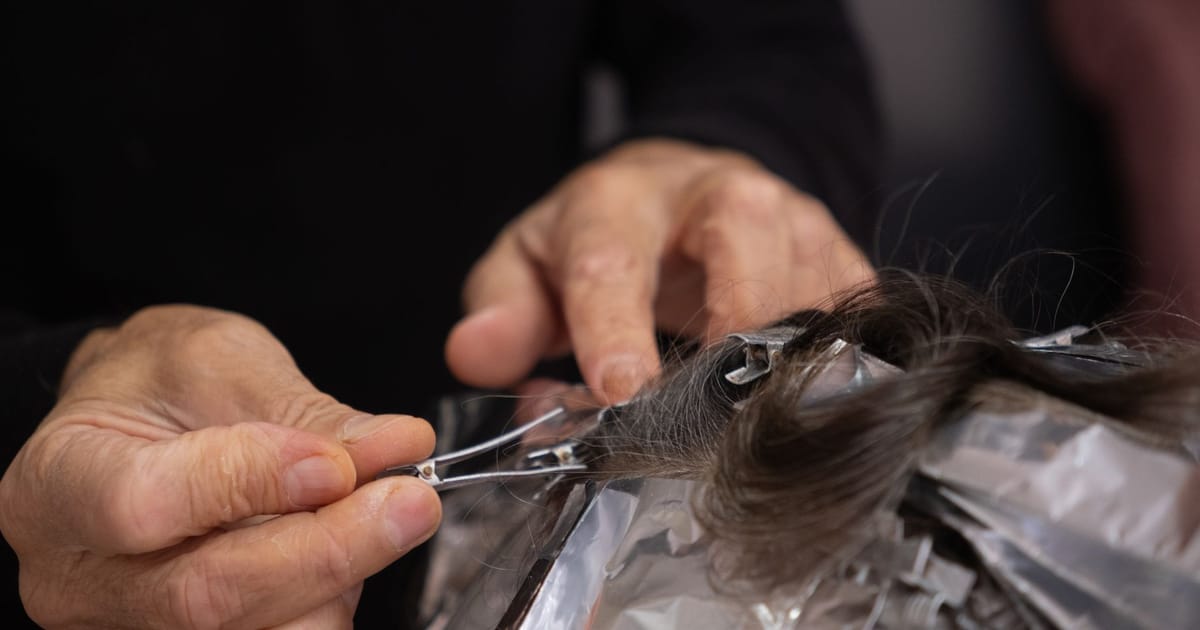
Balayage typically costs between $100 and $400 or more at US salons, according to Professional Beauty Association pricing surveys. Partial balayage on short to medium hair tends to land in the $100 to $200 range, while full balayage on long, dense, or very dark hair -- particularly when toner and a gloss finish are included -- routinely reaches $300 to $500 or higher at experienced colorists. Ranges vary widely by market and stylist skill level.
What Is Balayage and Why Does It Cost More Than Other Color?
Balayage is a freehand hair-coloring technique in which a stylist paints lightener or color directly onto sections of the hair by hand, without foils. The word is French for "sweeping," and that is precisely how it works -- the colorist sweeps product onto the hair in a way that mimics how the sun would naturally lighten it: brighter at the ends, softer and more diffuse near the roots.
Because there is no foil template guiding placement, balayage requires advanced training and a calibrated eye for color. A skilled colorist is making dozens of individual judgment calls about where to place lightener, how much saturation to apply, and how to blend sections together. That expertise takes years to build, and it is one of the main reasons balayage tends to cost more than a standard foil-highlight service.
According to salon industry pricing data compiled by the Professional Beauty Association, balayage typically runs $30 to $100 more than a comparable foil-highlight appointment on the same hair length. If you are weighing the two, the differences between balayage and highlights go beyond price alone -- placement, maintenance, and the overall look differ meaningfully.
Full vs. Partial Balayage: How the Scope Affects Price
The single biggest structural factor in the final quote is whether you are getting a full or partial service.
Partial balayage targets the top sections and the hair framing the face. The underlayers are left untouched. It delivers a brightening effect and is well-suited to clients who want a sun-kissed look without a dramatic change. Partial balayage typically costs $100 to $250 at US salons, according to Professional Beauty Association pricing benchmarks, and takes roughly one to two hours in the chair.
Full balayage covers sections throughout the entire head, including the underneath layers, creating a richer, more dimensional result. Full balayage on medium to long hair typically ranges from $200 to $450 or more, and can run higher at color specialists in major markets. Appointment time is usually two to three hours, sometimes longer on thick or very long hair.
Lower Your First-Appointment Cost
If you are new to balayage, starting with a partial service is a practical move. You can see how the color suits you and how your hair responds before committing to a full treatment at a higher price point.
What Drives the Price Up or Down
Hair Length and Density
Longer and thicker hair requires more lightener, more processing time, and more of a colorist's attention. Salons commonly price balayage in three or four length tiers -- short (above the shoulder), medium (shoulder to mid-back), and long (mid-back and beyond) -- with each tier adding $30 to $80 or more to the base price, according to Professional Beauty Association pricing surveys. Density matters as much as length: fine shoulder-length hair and thick shoulder-length hair are not the same job.
Starting Color and Desired Lift
How much lightening your hair needs is one of the most significant cost drivers. A client with medium brown hair who wants honey-blonde pieces requires considerably less lift -- and therefore less product and time -- than someone starting from dark brown or black who wants a dramatic light result. The more lift required, the more complex the application, and the higher the price. Colorists may also need to use a stronger developer or apply multiple rounds of lightener to reach the target level on resistant hair.
Toner and Gloss Finishing
Balayage is typically followed by a toner or gloss to neutralize unwanted warmth, refine the shade, and add shine. Toner is not always included in the quoted balayage price -- at many salons it is a separate line item costing $30 to $80 or more. Always ask whether toner is included when you receive a quote. Skipping toner is possible, but the result will usually look warmer and less polished than a fully finished balayage.
Stylist Experience and Salon Market
A colorist who has spent years specializing in balayage commands a higher hourly rate than a generalist fresh out of cosmetology school. According to U.S. Bureau of Labor Statistics occupational wage data, hairdresser and cosmetologist wages vary considerably by region and employer type, and salon pricing reflects those variations. A balayage that costs $150 at a mid-market salon in a smaller city may run $400 or more at a color specialist in a major metro area. Neither price is wrong for its market.
The Multi-Session Reality for Big Lightening Goals
Dramatic Lightening May Require More Than One Visit
If you are starting from dark brown or black hair and aiming for a significantly lighter result, one appointment may not get you there safely. Removing that much pigment in a single session risks over-processing the hair, leading to breakage or an uneven, brassy result. A skilled colorist will often recommend a two-session approach -- lighter balayage in session one, followed by a refinement and toner session four to six weeks later once the hair has recovered.
The multi-session route costs more upfront but produces a better, healthier result. When you are planning your budget, build in the possibility of a follow-up appointment. A $200 first session plus a $150 refinement session is a more realistic total than assuming a single visit will achieve a dramatic transformation.
This is also worth discussing openly during your consultation. A good colorist will tell you honestly whether your goal is achievable in one session or requires a phased approach. If a stylist promises platinum results from dark hair in a single visit without a detailed hair assessment, that is a signal to slow down.
Balayage vs. Traditional Highlights: Long-Term Cost Comparison
Balayage costs more per appointment than standard foil highlights, but it often costs less over the course of a year because the maintenance schedule is so much lighter. Traditional foil highlights create a defined line of regrowth that becomes visible within six to eight weeks, pushing many clients back into the salon on a tight schedule. Balayage, by contrast, blends into the natural root, so regrowth looks intentional rather than grown-out.
The Lower-Maintenance Advantage
Most balayage clients return every 12 to 20 weeks, compared to 6 to 8 weeks for foil highlights. If your balayage appointment costs $250 and you visit three times a year, your annual color spend is $750 before tip. A $175 highlight appointment every seven weeks adds up to roughly $1,300. The math often favors balayage over a full year even though the per-visit price is higher.
Read the full breakdown in how balayage and highlights compare if you are deciding between the two.
What Is Included (and What Is Not) in a Balayage Quote
When a salon gives you a price, it is worth asking exactly what that covers. In many cases the quoted price includes the hand-painting service and the processing time, but not:
- Toner or gloss: Adds $30 to $80 or more. Essential for a polished result.
- Blowout or styling: Some salons include a blowout; others charge separately, typically $30 to $60.
- Deep conditioning treatment: Bleach is drying, and some colorists recommend an in-salon bond-building or conditioning treatment. Expect $20 to $75 as a separate add-on.
- Color correction fees: If your hair has previous color that complicates the process, a colorist may quote a higher color correction rate. See salon hair color vs box dye for why previous at-home color can affect your options.
Getting an itemized estimate before your appointment prevents sticker shock at checkout.
Balayage Price by Hair Length and Type
The table below reflects typical ranges reported in Professional Beauty Association pricing surveys and industry pricing data. Actual prices vary by market, stylist experience, and whether toner is bundled.
| Service Type | Hair Length | Typical Price Range | Notes |
|---|---|---|---|
| Partial balayage | Short (above shoulder) | $100--$180 | Face-framing sections only; toner often extra |
| Partial balayage | Medium (shoulder to mid-back) | $150--$250 | Common entry point for first-time balayage |
| Full balayage | Short to medium | $180--$300 | More dimensional than partial; full head coverage |
| Full balayage | Long (mid-back and beyond) | $250--$450+ | Price rises with density and desired lift |
| Full balayage + toner | Any length | Add $30--$80 to above | Ask if toner is bundled before booking |
| Multi-session lightening | Dark starting color | $350--$700+ total | Two or more appointments; depends on target shade |
Source: Professional Beauty Association salon pricing survey data. Ranges reflect variation across US markets; major metro colorists frequently exceed the upper end.
How to Get the Best Value from a Balayage Appointment
Book a Consultation First
Many color specialists offer a standalone consultation -- sometimes free, sometimes a small fee applied to the service -- before the coloring appointment. Use it. Bring photos of your target look, and listen carefully to what the colorist says about whether it is achievable on your hair in one session. A colorist who gives you honest expectations is more valuable than one who tells you what you want to hear.
Before your appointment, review how to prepare for a hair color appointment so you arrive with clean, product-free hair and a clear sense of what you want.
Ask About Strand and Patch Testing
For first-time color clients or anyone with a sensitive scalp, ask the salon about a strand test and a patch test before your appointment. A strand test checks how your hair responds to the lightener; a patch test screens for allergic reactions to color chemicals. This is standard professional practice, not an unusual request.
Understand the Tipping Norm
Tipping on Color Services
The standard tipping range at US salons is 15 to 20 percent of the total service cost. On a $300 balayage, that is $45 to $60. For complex, multi-hour color work, many clients tip toward the higher end as a reflection of the skill and time involved. Most salons accept tips on card, but cash is always appreciated. For a full breakdown of when and how much to tip, see how much to tip your hairdresser.
Maintaining Your Balayage Between Appointments
Balayage's soft grow-out means you have flexibility on timing, but the color will look its best if you use a purple or blue toning shampoo once or twice a week to neutralize brassiness between salon visits. A bond-maintaining or moisturizing conditioner helps offset the drying effects of bleach over time. Ask your colorist for product recommendations suited to your specific shade and hair texture -- the right at-home routine extends the life of your color and pushes that next appointment further out.
If you are weighing whether to continue with balayage or try a lower-cost alternative, the comparison of salon hair color vs box dye covers the trade-offs honestly.
Frequently asked questions
How much does balayage cost on average?
According to Professional Beauty Association pricing surveys, balayage typically ranges from $100 to $400 or more at US salons. Short-hair partial balayage tends toward the lower end; full balayage on long, dense, or very dark hair -- especially when toner or a gloss is added -- frequently runs $250 to $500 or higher at experienced colorists.
What is the difference between full and partial balayage?
Full balayage covers sections throughout the entire head of hair, from the underlayers to the top sections, for a dimensional, sun-kissed result. Partial balayage focuses on the top and face-framing sections only. Partial typically costs $50 to $100 less than full and requires less processing time, making it a good entry point for first-time balayage clients.
Why does balayage cost more than highlights?
Balayage is a freehand painting technique that requires advanced training and takes longer to execute than foil highlights, which follow a more structured placement pattern. The extra skill and chair time are the main reasons balayage tends to run $30 to $100 more than a comparable foil-highlight service, according to salon industry pricing data.
Does balayage require a lot of maintenance?
No -- balayage's softly blended, root-free application means regrowth looks natural rather than obvious. Most clients can wait 12 to 20 weeks between appointments, compared to 6 to 8 weeks for traditional foil highlights. Lower visit frequency makes balayage more cost-efficient over a full year for many clients, even at a higher per-appointment price.
How much should I tip for balayage?
The standard tipping range at US hair salons is 15 to 20 percent of the service total, according to etiquette and industry guidelines. On a $250 balayage, that works out to $37 to $50. Some clients tip toward the higher end for complex color work or a longer appointment. Cash is generally appreciated, but most salons also accept tips on card.