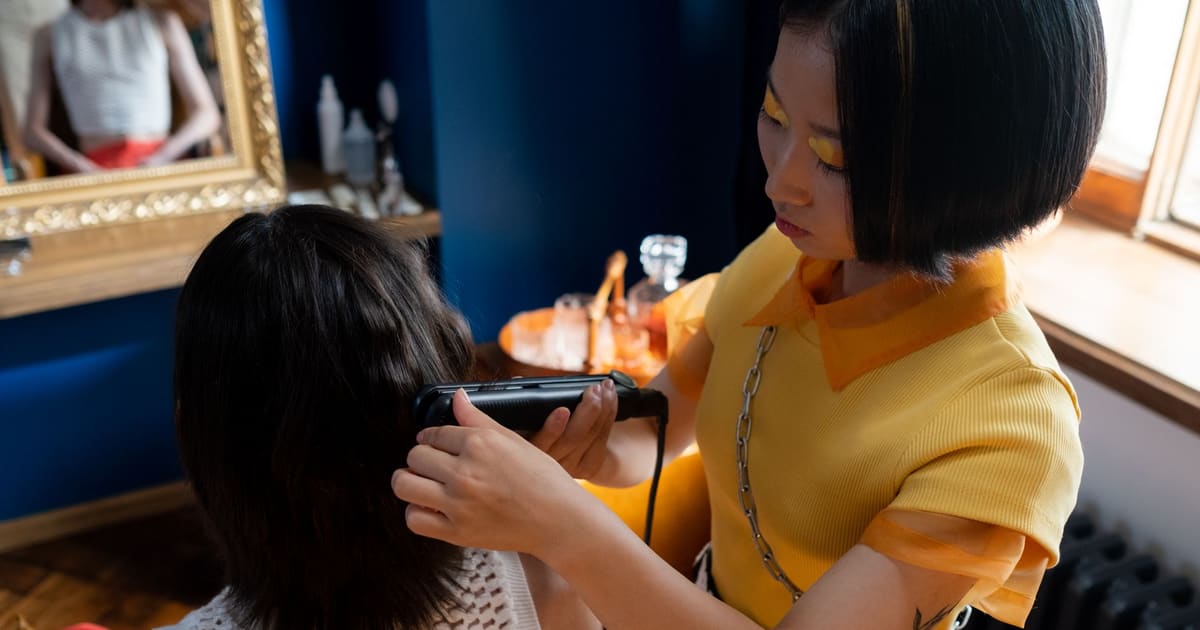
Both highlights and balayage can work on dark brunette hair, but they produce different looks, grow out differently, and carry different maintenance demands. For clients on a dark base, balayage typically creates a softer, more natural-looking result that grows out more gracefully, while foil highlights offer more precise placement and consistent contrast. The right choice depends on how much lift you want, how much maintenance you are prepared to commit to, and the condition of your hair.
How Highlights and Balayage Behave Differently on Dark Hair
The core technical difference between the two services matters more on dark hair than on lighter bases, because the contrast between the natural color and the lightened sections is higher.
Foil highlights on brunette hair use aluminum foil sections to isolate strands, apply lightener, and process them to a predictable level of lift. Because the foil traps heat and isolates the product from the surrounding hair, highlights can achieve a higher level of lift more reliably than freehand techniques. The result on dark hair is typically a defined, bright contrast -- obvious streaks of lighter color against a dark base. Modern highlight placements use varied foil sizes and irregular spacing to make this look dimensional rather than stripey, but the contrast remains more pronounced than with balayage.
Balayage on brunette hair is hand-painted directly onto the surface of the hair without foil. The lightener is applied to the mid-lengths and ends with less product at the root, producing a gradual blend from dark to light. Because the product is applied in open air without the heat boost of a foil, the lift achieved per session is typically less dramatic than with foil highlights. The trade-off is a softer, less abrupt graduation from dark root to lightened end -- and a grow-out pattern that looks intentionally natural rather than overdue.
The Lifting Process: What Brunettes Need to Know Before Booking
Dark brunette hair (levels 3 to 5 on the hair color scale) requires significantly more lifting to reach blonde or caramel tones than medium brown or dark blonde bases. This is the most important practical reality for brunettes considering either service.
Per-session lift limits: A reputable colorist will not attempt to lift dark hair more than three to four levels in a single session without a significant risk of breakage or orange banding. Dark brown hair lifted to a brassy orange is an intermediate stage on the way to blonde, not a finished result -- reaching a true warm blonde or caramel from a dark base in one session is rarely advisable or achievable without significant damage.
Multi-session realism: Clients starting from a medium to dark brunette base who want a significantly lightened balayage or highlight result should expect two to three sessions spaced six to eight weeks apart, according to professional colorist guidance. This is not a problem with the service; it is the correct, protective approach to lifting dark hair.
Previously colored hair: Dark hair that has been artificially darkened with box dye or repeated single-process color carries additional layers of artificial pigment that must be lifted before the underlying natural color. This is the most common reason dark-hair clients are told their initial appointment will be a consultation and first lift only -- the colorist needs to assess what they are actually working with.
Always Book a Consultation on Dark Hair
Before committing to a full balayage or highlight service on a dark base, book a consultation appointment. A skilled colorist needs to see your hair's condition, assess the color history, and set realistic expectations for what is achievable in a single session. Consultations are usually free or low-cost; skipping this step on dark hair regularly leads to mismatched expectations and potential color corrections.
Cost Comparison: Highlights vs. Balayage on Brunette Hair
Both services on dark hair cost more than equivalent services on lighter hair, because the lift required is more technically demanding and uses more product. According to booking-platform rate data and salon industry pricing surveys:
| Service | Short Dark Hair | Medium Dark Hair | Long Dark Hair | Notes |
|---|---|---|---|---|
| Partial highlights | $90--$150 | $110--$190 | $130--$230 | Placement around face frame and top sections only |
| Full foil highlights | $140--$250 | $170--$320 | $200--$400+ | All-over placement; more foils, more time |
| Balayage (standard) | $120--$200 | $150--$280 | $180--$350+ | Hand-painted; 2+ sessions may be needed for significant lift |
| Balayage + toner | $160--$240 | $190--$330 | $230--$400+ | Toner is usually needed post-lift for brunettes |
| Color correction | $300--$800+ | $300--$800+ | $300--$800+ | If previous color or lift attempts need to be fixed first |
Source: booking-platform rate data and salon industry pricing surveys. Major metro markets typically sit at or above the upper end of these ranges. Multi-session estimates: allow for 2--3 full-price appointments to achieve significant lift from a dark base.
For a full cost breakdown of balayage services including the toner step that dark-hair clients almost always need post-lift, the balayage cost guide covers pricing by hair length and market. The highlights cost guide breaks down partial vs. full-foil pricing in the same format.
Which Grows Out More Gracefully on Dark Hair?
Grow-out behavior is one of the most practically important differences between the two services for brunette clients.
Foil highlights on dark hair produce a visible root line as the natural dark hair grows in. After eight to twelve weeks, most clients with dark hair and foil highlights will notice a clear boundary between the dark regrowth and the lightened sections. This is not necessarily a flaw -- some clients like the defined look -- but it does mean the service needs refreshing on a relatively consistent schedule to avoid looking overdue.
Balayage was developed specifically to grow out naturally. The freehand technique leaves the roots darker intentionally, so as the hair grows, the transition from dark to light is gradual rather than abrupt. Most brunette clients find their balayage maintains a wearable, natural look for 12 to 16 weeks between appointments, according to salon industry guidance. This lower maintenance frequency is one of the primary reasons brunettes often choose balayage over foil highlights.
Warm vs. Cool Tones: Choosing the Right Direction for Your Skin
Dark brunette hair lifted to any blonde or light brown shade will first pass through a warm, orange-yellow stage as natural pigment is removed. What happens next depends on what tonal direction the client chooses and whether a toner is applied.
Warm tones -- caramel, honey, butterscotch -- work with the natural warm pigment in brunette hair rather than against it. These shades are more achievable in a single lift session from a medium dark base, require less aggressive toning, and tend to complement medium to deeper skin tones well. Warm balayage on brunettes is among the most popular and accessible color outcomes.
Cool tones -- ash blonde, platinum, cool caramel -- require more aggressive lifting to eliminate the underlying warm pigment, followed by a toner to neutralize remaining brassiness. On dark brunette hair, achieving a genuinely cool blonde typically requires multiple sessions. The toner used to cool the result also fades over four to six weeks, meaning maintenance is ongoing.
If brassiness is a concern regardless of direction, see the balayage vs. highlights guide for a full explanation of toner use, purple shampoo maintenance, and how each lightening technique handles the brassiness problem differently.
How to Communicate Your Goal to Your Colorist
The single most effective step before any dark-hair color appointment is arriving with reference photos -- multiple photos showing the look you want, and ideally a photo of your current hair color and condition.
Describe your goal in terms of outcome, not technique: "I want a warm, sun-kissed look that grows out naturally" rather than "I want balayage." This gives the colorist room to recommend the right technique for your hair's specific starting point.
Key questions to ask your colorist before the appointment:
- "Is this achievable in one session given my starting color?"
- "What is the realistic color after the first appointment?"
- "Will I need a toner, and how often will I need to refresh it?"
- "What maintenance will I need between appointments?"
Set a Realistic First-Session Expectation
If you are dark brunette and the colorist tells you the first session will not reach your reference photo's level of lightness, this is good news -- it means they are protecting your hair's integrity. Ask what the hair will look like after session one, and agree on a multi-session plan before you commit.
Maintaining Color on Dark Brunette Hair: What to Budget
Dark hair that has been lightened -- whether via highlights or balayage -- needs more maintenance between appointments than untreated hair. The lightening process reduces the hair's natural protein structure, making color-treated hair more porous and more susceptible to damage from heat, sun, and chlorine.
Practical ongoing costs after your initial service:
- Toner refresh: $45 to $90 at a salon, typically needed every 4 to 6 weeks for clients maintaining a cool tonal direction
- Gloss treatment: $50 to $100, applied at the salon to refresh shine and softly enhance color depth, typically every 6 to 8 weeks
- At-home maintenance: purple or blue shampoo ($15 to $30) used once or twice weekly to neutralize brassiness between salon visits
- Color-safe conditioner and heat protectant: ongoing product investment to protect the structural integrity of lightened hair
For a full breakdown of the toner step -- what it costs, how long it lasts, and when it is worth doing professionally versus maintaining at home with tinted shampoos -- the hair toner cost page is referenced within the balayage cost guide. If the combination of initial lift sessions and ongoing maintenance is leading to visible damage or breakage, the color correction cost guide explains what that correction process involves and what to budget for it.
Frequently asked questions
Is balayage harder to do on dark hair than highlights?
Balayage on dark brunette hair requires precise hand-painting technique and careful sectioning to avoid patchy results, which makes stylist skill more critical than with foil highlights. However, foil highlights on dark hair also demand careful placement to avoid an overly stripy or blocky look. Both services require an experienced colorist on dark bases -- neither is genuinely easier.
Will highlights look too stripy on dark brown hair?
Foil highlights on dark brown hair can appear stripy if placed too uniformly or in a high density. Modern highlight placements use varied sizes and irregular spacing to mimic natural sun-kissed dimension. A skilled colorist working on brunette hair will vary foil size and placement to avoid the striped look common in older highlight techniques. Always show your colorist reference photos of the dimension you want.
How many sessions does it take to get true blonde balayage from dark hair?
Going from a medium to dark brunette base to a true blonde balayage typically requires two to three sessions spaced six to eight weeks apart, according to professional colorist guidance. Dark hair can only be lifted a limited number of levels per session without structural damage -- attempting to reach platinum blonde in a single appointment on dark hair risks significant breakage and is not advisable.
What is the best type of highlights for brunettes?
For brunette hair seeking natural-looking dimension without a dramatic contrast, partial highlights using balayage or painted foil placement are generally preferred over full-head uniform foil highlights, according to salon industry guidance. Warm caramel and honey tones tend to complement dark bases; cool ash or platinum contrast is achievable but requires more lifting sessions and more maintenance to prevent brassiness.
Do highlights or balayage damage dark hair more?
Both services use lightening agents that can affect hair integrity, but damage is determined by the skill of the application, how much the hair needs to be lifted, and the starting condition of the hair -- not the technique itself. Dark hair that needs significant lifting carries inherent risk regardless of method. A strand test before either service is advisable, especially on previously color-treated hair.
How long does balayage last on dark hair before it looks grown out?
Balayage on dark hair is designed to grow out gradually -- the absence of a hard root line means the grown-out look is intentional and low-contrast. Most clients find it maintains a wearable look for 12 to 16 weeks between appointments. Full-foil highlights on dark hair show a more defined root line and typically need refreshing every eight to twelve weeks.