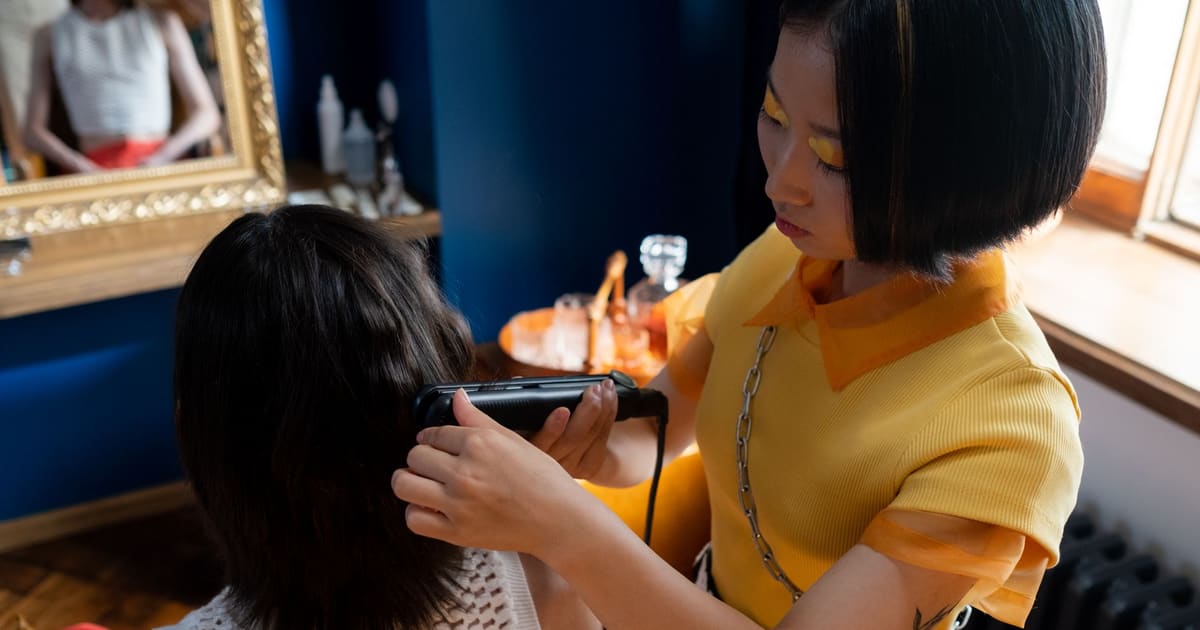
Hair toner services typically cost $45 to $90 at US salons when added as a standalone or add-on service after highlighting or balayage, according to booking-platform rate data. Some salons include a basic toner application in the price of highlights or balayage; many price it separately because not every client needs it and the product cost is a real line item. The most common reason clients encounter a toner charge they did not anticipate is that it was not discussed at the time of booking.
What Is Hair Toner and Why Do Stylists Charge for It?
Toner is a semi-permanent or demi-permanent hair color product applied after lightening or lifting services to neutralize unwanted warm, yellow, or brassy tones. When hair is lightened - whether through bleach, highlights, or balayage - the underlying pigment in the cortex is exposed. Depending on the hair's natural base color and the depth of lift achieved, that exposed pigment can appear orange, yellow, or brassy rather than the cool, ashy, or neutral tone most clients are aiming for.
Toner works by depositing a tone that neutralizes the unwanted pigment using color theory. Yellow is neutralized by violet; orange is neutralized by blue. A stylist chooses the toner formula based on the current tone of the lifted hair and the target result.
The reason salons charge for toner separately comes down to three factors:
- Product cost. Professional toner is purchased by the tube or pot and mixed with developer. The product used on a client with a full head of highlights represents a real cost that the salon absorbs if not priced into the service.
- Application and processing time. Applying toner to a full head of highlights or balayage adds 20 to 45 minutes to the appointment - additional chair time that represents real labor cost.
- Not every client needs it. A client with naturally warm-toned hair going for a warm honey highlight may not want or need toner. Pricing toner into every highlight service would overcharge those clients. Pricing it separately means clients who need it pay for it; those who do not can opt out.
Ask About Toner Before Your Appointment
When booking a highlight or balayage appointment, ask directly: "Is toner included in the price?" If it is not, ask what the toner charge will be based on your hair length and target tone. A quote of "$180 for balayage" that does not include toner may become "$230 or $250" at checkout. Knowing upfront prevents a surprise on the bill.
Average Hair Toner Cost at US Salons
Toner pricing at US salons varies by whether it is charged as a standalone service, an add-on to a color appointment, or bundled into a package, according to booking-platform rate data and salon industry pricing surveys.
| Toner Service | Typical Price Range | Notes |
|---|---|---|
| Toner add-on (short to medium hair) | $25 - $50 | Added to highlights or balayage appointment |
| Toner add-on (long or thick hair) | $45 - $90 | More product and processing time required |
| Standalone toner appointment | $45 - $90 | For maintenance between color services |
| Toner included in highlight/balayage | $0 add-on | Bundle pricing; confirm at booking |
| Glossing treatment (related service) | $50 - $100 | Adds shine + slight tonal shift; different product |
Source: booking-platform rate data and salon industry pricing surveys. Ranges reflect variation across US markets; specialist colorists and boutique studios frequently exceed the upper end of these ranges.
When Is Toner Added to a Color Service?
Toner is most commonly needed after the following services:
Highlights and foil work. The lightened sections of hair are the areas where brassiness is most likely to appear. After foils are removed, the stylist evaluates the tone of the lifted hair and applies toner to the highlighted sections or all over to achieve the target result.
Balayage. Because balayage is a freehand technique that lifts different sections to different degrees, some areas of the hair may lift to a truer blonde while others retain more warmth. Toner is applied all over - sometimes as a bath or gloss - to even out the tone and achieve the cohesive look a balayage client is expecting.
Pre-lightening before color. When a client wants a vivid color (such as pastel pink or silver) that requires a very light base, the hair is bleached first and then toned to a pale yellow or white before the final color is applied. In this workflow, toner is an intermediate step in a multi-stage service.
Color correction. When correcting a previous color result that is too warm, orange, or brassy, toner applied to previously lightened hair is often the fastest fix - particularly if the hair has already been adequately lightened and just needs tonal adjustment.
Toner is not typically used on dark hair that has not been lightened. It requires a lifted, porous surface to deposit effectively. On natural dark brown or black hair, toner has minimal visible effect because there is no underlying light pigment for it to interact with.
Hair Toner vs. Hair Gloss: What Is the Difference?
These terms are used inconsistently across salon menus, which creates understandable confusion. The distinction is important because they are different products with different effects and different ideal uses.
Hair toner is a corrective product. It is formulated specifically to neutralize unwanted tones in lightened hair. A violet toner cancels yellow; a blue toner cancels orange. Toner works on lightened hair; it has limited effect on unlifted natural hair. It is typically mixed with a low-volume developer (6 or 10 volume) and processed for 10 to 30 minutes.
Hair gloss is an enhancing product. It adds shine, refreshes color vibrancy, and can slightly adjust tone on any hair - dark, naturally brown, medium brown, or lightened. A gloss does not correct strong brassiness the way a toner does, but it makes the hair look healthier, shinier, and more saturated. A clear gloss adds shine without any tonal change; a tinted gloss adds both shine and color depth. Gloss is typically used on any hair type, not just lightened hair.
Some salons use "gloss" and "toner" interchangeably on their service menus because the product line they use (such as Redken Shades EQ or Wella Shinefinity) technically functions as a gloss-toner hybrid. What matters is understanding whether the product is addressing a corrective need (brassiness on lightened hair) or an enhancement need (shine and color depth on any hair).
For clients deciding between these two services, asking your stylist "do I have brassiness that needs correcting, or am I just looking for more shine and vibrancy?" usually clarifies which service fits the situation.
How Long Does Toner Last in Hair?
Toner is a semi-permanent or demi-permanent deposit, meaning it sits primarily on or just inside the hair cuticle rather than in the deeper cortex where permanent color bonds. This is why toner fades with each wash - water, shampoo, and heat from styling gradually dislodge the pigment deposit.
Factors that affect how long toner holds:
- Wash frequency. Every wash removes some toner. Clients who wash daily see toner fade faster (three to four weeks) than those who wash two or three times per week (six to eight weeks).
- Shampoo type. Sulfate-containing shampoos are more aggressive at stripping the cuticle and remove toner faster. Sulfate-free shampoos maintain the cuticle and significantly extend toner life.
- Water temperature. Hot water opens the cuticle and accelerates color loss. Cool or lukewarm rinses preserve toner longer.
- Porosity of the hair. Highly porous hair (which is common in previously bleached or chemically processed hair) absorbs product quickly but also loses it quickly. Porosity-filling treatments before toning can improve toner hold.
How to Make Toner Last Longer Between Salon Visits
The most effective steps for extending toner life at home, per cosmetology maintenance guidance:
Switch to sulfate-free shampoo. This single change is the highest-impact maintenance step after a toning appointment. Sulfate-free formulas clean the hair without stripping the cuticle.
Use a purple or blue shampoo once or twice per week. For blondes and highlighted clients, a purple shampoo maintains the toner's cool effect by depositing a small amount of violet pigment with each wash. Use it in rotation with regular shampoo rather than exclusively - daily purple shampoo can deposit too much pigment and leave a visible purple cast.
Rinse with cool water. After shampooing and conditioning, finish with a cool water rinse to close the cuticle and lock in color.
Avoid chlorinated water. Pool water, particularly chlorinated indoor pools, strips color aggressively. If you swim regularly, wear a swim cap or rinse with clean water before entering the pool to reduce chlorine absorption.
For a comprehensive guide to maintaining hair color investment between appointments, how to maintain hair color covers the full maintenance routine for all color services. For context on the balayage and highlights services that most commonly lead to a toner charge, balayage cost and highlights cost each cover pricing and what the services involve in full detail. For a complete view of US salon pricing across all color and hair service categories, average salon prices provides the broader reference benchmark.
Frequently asked questions
Why does my salon charge separately for toner?
Toner is a separate product applied after lightening to neutralize warm or brassy tones. It requires its own developer and processing time -- adding 20 to 45 minutes to a color appointment. Many salons price it separately because not every client needs it. Asking whether toner is included before booking prevents unexpected charges.
How long does hair toner last?
Professional toner applied at a salon typically lasts four to eight weeks before washing out, according to cosmetology industry guidelines. Toner is a semi-permanent or demi-permanent deposit - it does not penetrate the hair cortex the way permanent color does, so it fades gradually with each wash. Using color-safe, sulfate-free shampoo significantly extends how long toner holds its tone between salon visits.
Does toner damage hair?
A professional toner applied correctly carries minimal damage risk. Most salon toners are demi-permanent or semi-permanent formulas that deposit color without lifting - they do not require high-developer peroxide and do not open the hair cuticle aggressively. The exception is toners mixed with 20-volume or higher developer, which carry slightly more risk on already-lightened hair. A well-trained stylist selects the appropriate developer strength for your hair's condition.
What is the difference between toner and hair gloss?
Toner is formulated specifically to neutralize unwanted tones in lightened hair - canceling brassiness or yellow using color theory. A hair gloss is a broader treatment that adds shine, refreshes faded color, and can slightly adjust tone on any hair - dark, light, or previously colored. Toner is corrective; gloss is enhancing. Some clients with lightened hair benefit from both, while clients with darker hair typically use a gloss rather than a toner.
Can I use purple shampoo instead of going to the salon for toner?
Purple shampoo deposits violet pigment to counteract yellow tones and extend the life of a salon toner -- it is a maintenance tool, not a replacement. It cannot correct strong brassiness the way a professional toner can, and overuse leaves a visible purple cast. Most stylists recommend using it once or twice per week to supplement toning, not replace it.
How often should I get a toner applied at the salon?
Toner typically needs refreshing every four to eight weeks depending on wash frequency and products used. Clients who wash daily with sulfate shampoos may see toner fade in three to four weeks; those washing two or three times weekly with sulfate-free shampoo often extend results to six to eight weeks. A stylist can advise based on your color history and routine.